Digital Fatigue: A Growing Global Health Challenge
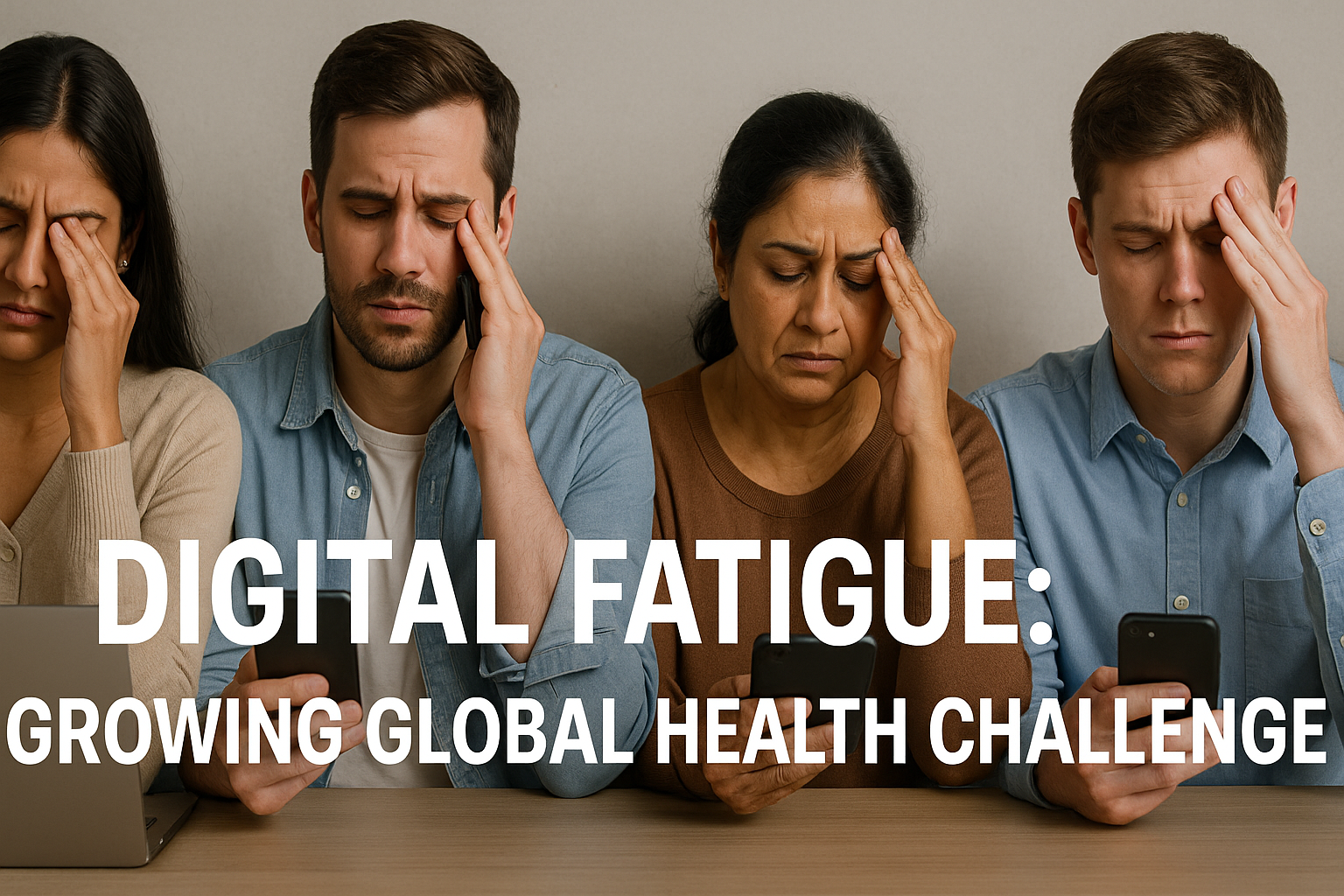
Digital fatigue is emerging as a major global health concern, affecting not only the digital workforce but nearly every member of a modern family. Children attending online classes, teenagers immersed in social media, adults navigating hybrid work, and even older adults relying on digital tools for communication are experiencing unprecedented levels of screen-induced exhaustion.
This phenomenon goes far beyond feeling “tired.” Digital fatigue manifests as a constellation of symptoms: persistent mental tiredness, reduced concentration, irritability, headaches, eye strain, sleep disruption, and a notable decline in cognitive stamina. Research from multiple fields – neuroscience, ophthalmology, ergonomics, and psychology shows that prolonged digital exposure disrupts circadian rhythms, strains the visual system, increases cognitive load, and contributes to sympathetic nervous system overactivation.
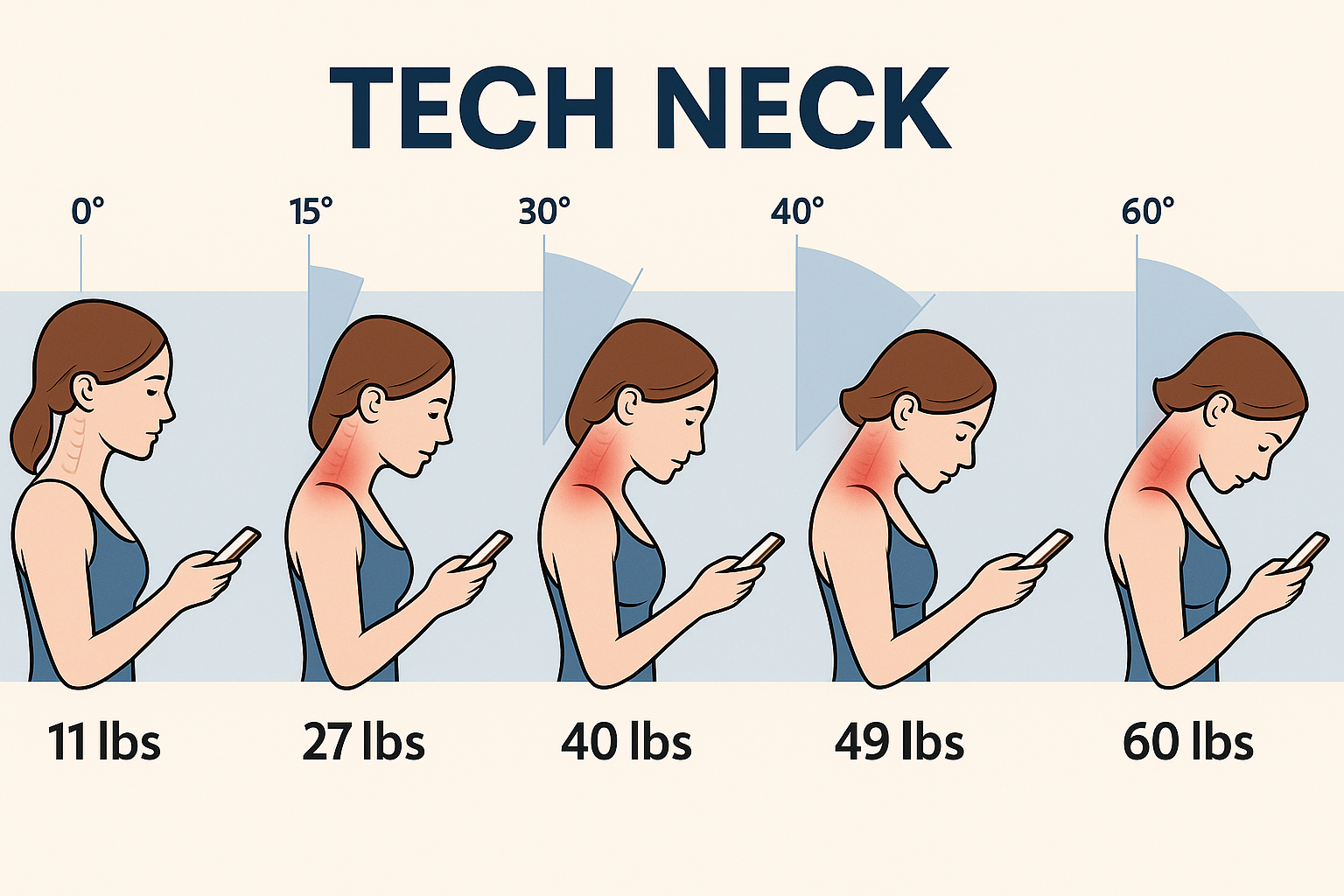
Importantly, digital fatigue rarely occurs in isolation. It frequently coexists with other digital lifestyle disorders such as Tech Neck, poor digestion from long sitting, mood disturbances, and rising anxiety. Together, these interlinked conditions reflect the deeper impact of digital life on physical, mental, and emotional well-being.
This guide presents the most comprehensive, evidence-based overview of digital fatigue available today. Drawing from modern medicine, public health research, and Ayurvedic science, it examines how digital fatigue develops, who is most vulnerable, and how age, gender, and digital habits shape the risk. Most critically, it outlines a structured, integrative recovery plan – including ergonomic corrections, behavioral strategies, Ayurvedic therapies, and proven herbs — to help individuals and families reclaim clarity, energy, and long-term balance.
What Exactly Is Digital Fatigue?
A Multi-System Exhaustion Driven by Screen-Centric Living
Digital fatigue refers to the physical, cognitive, and emotional exhaustion that arises from sustained interaction with digital screens and digital work environments. Unlike ordinary tiredness, digital fatigue reflects multi-system overload, affecting several domains simultaneously:
Core Characteristics
Digital fatigue is typically defined by:
- Mental exhaustion despite adequate sleep
- Reduced concentration, shorter attention span
- Eye strain, burning, dryness, or blurred vision
- Headaches, often tension-type or frontal
- Postural discomfort (neck, shoulders, upper back)
- Sensory overload — noise, alerts, multitasking
- Irritability and low motivation
- Sleep disruption and delayed sleep onset
- Brain fog, slower thinking, reduced creativity
These symptoms are not caused by a single factor but by a convergence of visual strain, cognitive load, sensory input, posture, hormonal disruption, and prolonged sedentary behavior.
| Regular Fatigue | Digital Fatigue |
|---|---|
| Caused by physical exertion or lack of sleep | Caused by digital overstimulation & cognitive overload |
| Improves with rest | Often persists despite rest |
| Mostly physical | Physical + mental + sensory |
| Predictable | Sudden or cumulative |
How It Overlaps With Other Digital Lifestyle Issues
Digital fatigue commonly intersects with:
- Tech Neck / Forward Head Posture
- Digital Eye Strain / Computer Vision Syndrome
- Digestive sluggishness caused by long sitting
- Mood disturbances & mild anxiety
- Sleep cycle disruption (blue light exposure)
This overlap means treating digital fatigue requires a holistic approach, not isolated symptom management.
Why Digital Fatigue Is Exploding Worldwide
The Perfect Storm of Technology, Lifestyle, and Environment
Digital fatigue has existed for as long as screens have. But something changed in the past decade and especially post-2020 pushing this problem into a global epidemic affecting families, workplaces, and even young children.
A. Record-Breaking Screen Time Across All Ages
Daily screen time has surged across the world:
- Children: 4–6 hours/day
- Teenagers: 7–9 hours/day
- Adults: 8–12 hours/day (work + entertainment)
- Seniors: increasing use of smartphones & OTT platforms
This sustained exposure overloads visual pathways, attention networks, and sleep mechanisms.
B. The Rise of Hybrid & Remote Work
Remote work has increased:
- Prolonged laptop usage
- Back-to-back video calls
- Lack of movement
- Poor ergonomic setups
- Mental monotony & cognitive overload
For many professionals, the workday no longer has natural boundaries.
C. Smartphone Dependency Across Age Groups
Smartphone fatigue is a critical driver:
- Frequent micro-interruptions
- Long social media scrolling
- Continuous notification-driven arousal
- Habit loops causing compulsive checking
Recent RCTs show reducing smartphone usage improves stress, sleep, and mood within 3 weeks , highlighting the causal impact of screen exposure.
D. Video-Call Fatigue (Zoom Fatigue)
Research shows video calls drain the brain due to:
- Excessive close-up eye contact
- Constant self-view
- Reduced mobility
- Higher cognitive effort to read facial cues
- Lack of micro-breaks
This form of digital fatigue significantly affects students, teachers, managers, and remote teams.
E. Lifestyle Factors Amplify the Problem
- Irregular meals → weak digestion → brain fog
- Chronic sitting → low circulation → fatigue
- Poor lighting → eye strain
- Lack of sunlight → circadian disruption
- Stress → higher baseline fatigue
Digital fatigue is not a screen problem alone it is a lifestyle ecosystem problem.
F. Impact on Children & Teenagers
Children now experience:
- Reduced attention spans
- Increased irritability
- Poor sleep quality
- Eye strain at very young ages
- Higher anxiety with social media use
This is a major reason digital fatigue is becoming a family-wide issue, not just an office problem.
G. Impact on Older Adults
Seniors using digital tools for entertainment or connection often face:
- Eye strain
- Neck stiffness
- Reduced sleep quality
- Cognitive overload (navigating apps)
Digital fatigue is now multi-generational.
Global Data: How Widespread Is Digital Fatigue?
What the numbers reveal across age, gender, and digital environments
Digital fatigue is not a vague concept , multiple population studies now show clear, measurable patterns in how screen exposure affects different age groups and demographics. While data varies by country, clear global trends have emerged.
A. Daily Screen Time by Age Group
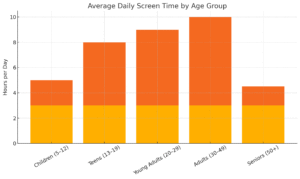
Average time on smart phone is rising sharply since 2020
A CDC-linked review and several global surveys consistently show a dose-response relationship the more screen hours per day, the more severe the reported symptoms of:
- Eye strain
- Sleep disturbance
- Anxiety
- Irritability
- Reduced cognitive stamina
- Physical discomfort (neck, shoulder, back tightness)
Several national-scale observational studies in the US, UK, and Australia indicate screen time above 4 hours/day is strongly associated with higher stress and sleep disruption, with the effect more pronounced in adolescents and working professionals.
B. Symptom Burden by Age and Gender
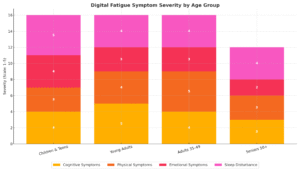
Children & Teens
- Increased emotional reactivity
- Difficulty concentrating
- Higher fatigue during school hours
- Poor sleep onset
- Frequent headaches after online classes
Girls tend to report higher levels of mental fatigue and anxiety, while boys show higher sensory overstimulation and irritability.
Young Adults (20–35)
This group shows the highest overall digital fatigue burden due to:
- Full-time digital work
- Social media engagement
- Gaming / streaming
- Late-night device use
- Irregular sleep cycles
Symptoms include:
- Brain fog
- Tech Neck
- Eye strain
- Mood dips
- Afternoon energy crashes
Adults (35–49)
Trends show:
- Stronger musculoskeletal symptoms
- Stress-related fatigue
- Sleep disturbances
- Sensory overload
Women often report more fatigue + cognitive overload, particularly in hybrid work situations balancing home and work tasks.
Older Adults (50+)
Despite lower screen usage, older adults report:
- Higher perception of eye strain
- Slower cognitive recovery after screen exposure
- Poorer sleep from evening digital habits
Older adults also struggle with navigational overload, leading to higher mental fatigue even with moderate screen use.
C. Video-Call Fatigue Statistics (Zoom Fatigue)
Studies show:
- Professionals attending more than 4 video calls per day have a significantly higher risk of digital fatigue.
- Women report higher Zoom fatigue due to increased self-monitoring and emotional labor during calls.
- Students and teachers in online learning environments experience sustained cognitive fatigue directly linked to video call frequency.
- Bailenson’s Stanford research identifies four core drivers: excessive eye contact, constant self-view, reduced mobility, and increased non-verbal labor all contributing to measurable fatigue.
D. Clinical Evidence of Harm
A high-quality 2025 RCT measuring screen reduction showed:
- Decreased stress
- Improved sleep quality
- Improved mood scores
- Lower fatigue markers
This provides rare causal evidence (not just correlational data) linking high screen time to fatigue and psychological strain.
E. Why This Data Matters
Digital fatigue is not “in the mind.” It’s a measurable public health issue with objective patterns across demographics. It demands structured interventions, not casual advice.
5. How Screens Create Fatigue: The Science Behind the Symptoms
A clear look at the physical, cognitive, hormonal, and neurological pathways.
Digital fatigue develops through multiple interacting mechanisms. Today, research across neuroscience, ophthalmology, ergonomics, and behavioral psychology sheds light on how digital exposure drains energy.
A. Visual System Strain
The eyes were not designed for prolonged near-focus tasks.
Key contributors:
- Reduced blink rate: falls from ~18/min to 4–6/min during screen use
- Tear film instability: leads to dryness & irritation
- Continuous accommodation: ciliary muscle overuse causes headaches
- Glare & blue light: adds discomfort, particularly in children
This is the root of Computer Vision Syndrome, affecting 50–70% of screen users globally.
B. Cognitive Load & Mental Effort
Digital environments create:
- Rapid context switching
- Multitasking pressure
- Decision fatigue
- Notification-driven micro-stress
- Difficulty sustaining focused attention
On video calls, cognitive load increases further due to:
- Self-monitoring
- Reading micro-expressions
- Audio/video delays
- Reduced mobility
- Forced sustained eye contact
This generates mental fatigue faster than in-person communication.
C. Postural & Musculoskeletal Strain
Digital fatigue is deeply connected to Tech Neck, shoulder knots, and back tension.
Common mechanisms:
- Forward head posture
- Rounded shoulders
- Sustained neck flexion
- Deactivated core muscles
- Decreased circulation
This mechanical strain interacts with the nervous system, increasing:
- Sympathetic activation
- Stress
- Shallow breathing
- Poor sleep quality
D. Hormonal Disruption (Cortisol & Melatonin)
Prolonged digital use, especially at night affects:
- Melatonin suppression → delayed sleep → next-day fatigue
- Cortisol dysregulation → feeling “wired but tired”
- Reduced REM sleep → poor memory consolidation
Screens directly impact circadian alignment, especially in younger users.
E. Sensory Overload & Emotional Fatigue
Digital notifications, media stimulation, and constant sensory input generate:
- Nervous system overstimulation
- Irritability
- Emotional exhaustion
- Reduced motivation
- Mood instability
This maps closely to what Ayurveda calls Prana Vata disturbance.
F. Micro-Inefficiencies
Thousands of tiny, unnoticed strains accumulate through the day:
- Minor eye strain
- Minute posture changes
- Repetitive checking behavior
- Fragmented attention
- Shortened breath cycles
Individually small, together they create significant fatigue by evening.
6. How Modern Medicine Approaches Digital Fatigue
Strengths, limitations, and its essential role in diagnosis
Modern medicine does not use “digital fatigue” as a single diagnostic category. Instead, it recognizes a constellation of conditions that fall under this umbrella.
Here is how clinicians approach it.
A. What Medicine Does Well
1. Clear Diagnostic Framework
Doctors evaluate:
- Vision (refraction, dryness, accommodation fatigue)
- Musculoskeletal health (neck, shoulder, back)
- Neurological symptoms (numbness, headaches)
- Sleep patterns
- Stress, anxiety, depression
- Ergonomic setup history
This helps rule out serious pathology.
2. Evidence-Based Symptom Management
Depending on symptoms, clinicians may prescribe or recommend:
- Artificial tears for dryness
- Corrective lenses or blue-light filters
- NSAIDs or muscle relaxants for neck pain
- Physiotherapy for posture correction
- CBT or counseling for burnout
- Sleep hygiene interventions
- Melatonin supplements
- Light therapy for circadian disruption
These solutions are effective for acute symptom relief.
3. When Needed: Referrals & Imaging
For red-flag symptoms:
- Neurological evaluation
- MRI for radiculopathy
- Ophthalmologic assessment
- Sleep studies
Modern medicine is essential for serious or escalating symptoms.
B. Where Modern Medicine Struggles
Digital fatigue is fundamentally a lifestyle-mediated, multi-system problem. Medicine faces challenges with:
1. Long-term behavior change
Medication helps symptoms, but recovery requires:
- Routine regulation
- Screen management
- Stress reduction
- Ergonomic corrections
These are behavioral, not pharmacological.
2. Holistic integration
Digital fatigue affects:
- Eyes
- Brain
- Hormones
- Posture
- Mood
- Digestion
- Sleep
Medicine often treats these individually rather than as an interconnected system.
3. Recurrence prevention
Symptoms often return once medication stops or screen time increases again.
C. Why Ayurveda Complements Modern Medicine
Ayurveda excels in:
- Restoring physiological balance
- Regulating nervous system function
- Improving sleep
- Reducing chronic fatigue
- Enhancing digestive fire (Agni)
- Building emotional resilience
- Offering practical daily routines
- Providing structural therapies (Nasya, Abhyanga, Greeva Basti)
Together, modern medicine + Ayurveda create a complete, sustainable approach.
7. The Ayurvedic Understanding of Digital Fatigue
A mind–body systems approach grounded in Prana Vata, Vata imbalance, Agni, and sensory load
While modern medicine explains digital fatigue through physiology and cognitive science, Ayurveda interprets it through the interrelation of Vata, Agni, and the Manovaha Srotas (mind-body channels). These concepts align remarkably well with current scientific findings, offering a comprehensive framework for management and prevention.
A. Prana Vata: The Subtle Force Most Affected by Digital Life
In Ayurveda, Prana Vata governs:
- Attention
- Mental clarity
- Higher cognitive functions
- Sensory processing
- Sleep initiation
- Emotional balance
Excessive screen exposure with its rapid visual changes, constant notifications, cognitive multi-tasking, and emotional stimulation, overstimulates Prana Vata. This leads to:
- Mental fatigue
- Anxiety
- Brain fog
- Restless sleep
- Irritability
- Difficulty sustaining attention
This pattern closely resembles what neuroscience describes as sensory overload, cognitive fatigue, and sympathetic overactivation.
B. General Vata Imbalance: Dryness, Irregularity, and Instability
Digital lifestyles aggravate general Vata through:
- Long sitting
- Irregular meals
- Inconsistent sleep timing
- High sensory input
- Excessive thinking
- Light, cold meals or excessive stimulants
Signs include:
- Dry eyes & skin
- Poor digestion
- Gas, bloating
- Irregular bowel movements
- Insomnia
- Nervous restlessness
These symptoms commonly co-occur with digital fatigue.
C. Agni Disturbance: The Digestive–Cognitive Fatigue Connection
Agni governs metabolic and digestive fire. When lifestyle irregularity increases:
- Agni becomes weakened (Agnimandya)
- Digestion slows
- Toxins (Ama) accumulate
- Cognitive fog intensifies
- Daytime energy drops
This explains why many people with digital fatigue also experience:
- Afternoon crashes
- Heavy-headedness
- Post-meal fogginess
- Indigestion
D. Manovaha Srotas: Mental Pathways Under Strain
Ayurveda describes the pathways of mental function as the Manovaha Srotas, which become disturbed during:
- Overthinking
- Excessive sensory input
- Constant screen interaction
- Emotional overstimulation
When these pathways are unsettled, mental tiredness and irritability appear rapidly even after minor screen usage.
E. The Ayurvedic Diagnosis of Digital Fatigue
In Ayurvedic terms, digital fatigue is primarily:
- Prana Vata aggravation
- General Vata elevation
- Agnimandya (weak digestion)
- Accumulated sensory stress
- Mild Pitta aggravation (in irritability, headaches)
This combination explains why digital fatigue affects multiple systems simultaneously, matching modern science’s multi-system model.
8. An Evidence-Based Ayurvedic Treatment Framework
A complete integrative protocol for symptom relief, cognitive recovery, and long-term balance
Ayurveda offers a uniquely comprehensive approach to digital fatigue because it treats:
- Mind
- Nervous system
- Eyes
- Musculoskeletal system
- Digestion
- Sleep
- Stress
- Daily rhythm
Below is a structured, multi-layered plan you can publish as the central therapeutic framework.
A. At-the-Desk Ayurvedic Interventions (Immediate Relief)
1. Trataka (Soft Eye Focusing Practice) : 30 – 60 seconds
Not the intense flame-based trataka, but a gentle, screen break focusing exercise:
- Look at a far object (8–20 feet away)
- Blink slowly
- Relax eye muscles
Reduces strain in ciliary muscles and resets focus.
2. Instant Eye Cooling Compress
Use cold rose water pads or a chilled cotton cloth for 20–30 seconds:
- Reduces burning
- Relieves dryness
- Calms irritation
3. Two-Minute Desk Abhyanga (Self Massage)
Massage with 1–2 drops of warm sesame oil on:
- Temples
- Behind ears
- Base of skull
- Upper trapezius
This calms Prana Vata and reduces upper-body tension.
4. Nadi Shodhana (Alternate Nostril Breathing) : 2–4 minutes
- Reduces mental load
- Improves parasympathetic activation
- Sharpens focus before meetings
Modern research correlates slow breathing with reduced sympathetic activity.
B. Daily Ayurvedic Practices (Short Routines with High Impact)
1. Morning Ritual
- Warm water + lemon or ginger
- Light oil massage on neck/shoulders
- 5–7 minutes sunlight exposure (circadian alignment)
- Gentle stretching (spine + eyes)
- Consistent breakfast within 60–90 minutes of waking
2. Meal Rhythm
Eat at:
- Regular times
- Warm, freshly cooked meals
- Avoid cold salads or raw foods at night
- Add ghee for eye & nervous system nourishment
3. Evening Ritual
- Screen curfew 60–90 minutes before bed
- Dim lighting (reduce blue wavelengths)
- Warm bath or steam inhalation
- Gentle head massage with warm oil
- Meditation for 5–6 minutes
This restores melatonin cycles disrupted by screens.
C. Clinic-Level Ayurvedic Therapies (Deep Nervous System Repair)
1. Nasya Therapy
Medicated oil (Anu Taila / Shadbindu Taila) is administered into nostrils.
Benefits:
- Clears head pathways
- Reduces headaches
- Improves sleep
- Calms overstimulation
- Reduces mental fog
Nasya is especially effective for screen-related sensory overload.
2. Abhyanga + Swedana (Massage + Steam)
Warm oil massage + herbal steam reduces:
- Muscle tension
- Tech Neck stiffness
- Mental fatigue
- Sleep disturbances
It also stabilizes Vata and improves circulation.
3. Shirodhara (For severe fatigue, anxiety, insomnia)
Continuous stream of warm oil on forehead:
- Stabilizes Prana Vata
- Deeply calms nervous system
- Improves sleep patterns
- Reduces anxiety
- Enhances mental clarity
Used in moderate-to-severe digital fatigue with psychological symptoms.
4. Greeva Basti (For Tech Neck + Digital Fatigue Overlap)
Warm medicated oil pooled over cervical spine:
- Relieves neck/shoulder pain
- Improves flexibility
- Reduces tension headaches
This directly addresses the postural strain contributing to fatigue.
D. Evidence-Backed Ayurvedic Herbs for Digital Fatigue
1. Ashwagandha
Clinical evidence shows:
- Reduced cortisol
- Improved sleep quality
- Better stress tolerance
- Reduced fatigue score
A primary herb for digital burnout.
2. Brahmi (Bacopa monnieri)
Research supports benefits for:
- Cognitive clarity
- Memory
- Attention
- Processing speed
Ideal for brain fog.
3. Shankhpushpi
Supports:
- Calmness
- Focus
- Nervous system stability
Useful for high mental-load individuals.
4. Tulsi
Strong adaptogenic & calming herb:
- Reduces mild anxiety
- Supports respiratory & mental clarity
5. Trikatu / Ginger formulations
Improves Agni (digestion) to reduce brain fog.
E. Safety Considerations
- Herbs should be taken under guidance
- Be careful with thyroid, blood pressure, or pregnancy
- Nasya not advised during sinus infection or pregnancy
- Avoid Shirodhara during acute illnesses
9. The 14-Day Digital Fatigue Recovery Program
A structured, science + Ayurveda hybrid plan for meaningful change
This program is structured on neurophysiology, Ayurvedic daily rhythm, ergonomics, and stress regulation.
It is designed to give:
- Immediate relief
- Medium-term correction
- Long-term stability
Principles
- Consistency beats intensity
- Small routines produce large gains
- Morning + evening rituals anchor recovery
- Movement counters digital stagnation
- Ayurvedic therapies accelerate nervous repair
DAY 1–3: Reset & Stabilize (Foundation Phase)
Focus: Regulating sleep, hydration, and basic routines
Morning:
- Wake at consistent time
- Warm water with ginger
- 3–5 min neck/shoulder stretches
- Brief self-massage on neck & temples
During Work:
- 20–20–20 eye rule
- Pomodoro cycles (25 min focus, 5 min break)
- One 2-minute breathing practice mid-day
Evening:
- Screen curfew 60–90 min
- Warm shower
- Herbal tea (tulsi/chamomile)
- Light head massage
- Sleep by 10:30–11pm
DAY 4–7: Repair & Nourish (Therapeutic Phase)
Focus: digestion, sleep quality, stress reduction
Add:
- Begin Ashwagandha or Brahmi (guided dosing)
- 10–15 min sunlight exposure
- Consistent meal timing
- Avoid late-night eating
Optional clinic visit:
- Nasya session
- Abhyanga + Swedana
These provide major symptom relief for many people.
DAY 8–10: Deep Nervous System Reset
Focus: reducing accumulated sensory load
Practices:
- Guided meditation (6–10 min)
- Nature exposure (walk outside)
- Limit non-essential screen time by 20–30%
- Continue herbs
Optional clinic therapy:
- Shirodhara for severe fatigue
- Greeva Basti for Tech Neck overlap
DAY 11–14: Integration & Long-Term Habit Setting
Focus: stabilizing gains and preventing relapse
Habits to anchor:
- Evening wind-down ritual
- Twice-weekly self-abhyanga
- Morning walks
- Mindful tech boundaries
- Weekly 2-hour digital detox window
By day 14, most individuals feel:
- Better sleep
- Sharper focus
- Reduced eye strain
- Lower irritability
- More stable energy
- Less neck tension
- Improved digestion
10. Home + Workplace Prevention Framework
Practical, sustainable strategies for families, remote workers, students, and organizations
Digital fatigue is not only an individual challenge , it is a household and workplace ecosystem problem. Prevention requires structural changes in how we work, how families use screens, and how schools and companies design their digital environments.
Below is a unified prevention framework that benefits every age group.
A. Prevention at Home (For Families, Parents, Children & Seniors)
1. Household Digital Boundaries
Families thrive with predictable, shared rules:
- No screens during meals
- No screens in bedrooms (especially children)
- Device-free zones (kitchen, dining area, study corner)
- Digital curfew 60–90 minutes before bedtime
These reduce sensory input late in the day and stabilize sleep cycles.
2. Age-Specific Guidelines
Children (5–12 years)
- Replace passive screen time with active play
- Use larger screens instead of phones for learning
- 20–20–20 rule made fun (timer games)
- Encourage drawing, puzzles, reading as alternatives
- Outdoor time daily (sunlight + grounding)
Teens (13–19 years)
- Strict bedtime screen cutoff
- Regular reminders to switch postures
- Encourage mindful social media usage
- Promote physical activity (essential for circadian health)
Adults
- Scheduled digital breaks
- Ergonomic workspace even at home
- Evening “unplug” window
- Daily stretching and strengthening
Older Adults
- Larger fonts and screens (reduces eye strain)
- Ambient lighting to prevent glare
- Tutorials on safe navigation to reduce cognitive load
- Breaks during OTT or video calls
3. Light & Environment Optimization
- Use warm lights in the evening
- Reduce harsh overhead lighting
- Position screens perpendicular to windows
- Avoid watching screens in complete darkness
- Increase indoor plants (improve air quality and psychological comfort)
4. Family-Based Ayurvedic Practices
- Family evening tea ritual (tulsi/ginger)
- Weekend self-abhyanga
- Morning sunlight exposure
- Shared digital detox hours
This makes Ayurvedic lifestyle more engaging and sustainable.
B. Prevention at Work (Employees, Teams & Organizations)
1. Meeting Hygiene
Organizations can significantly reduce employee digital fatigue by enforcing:
- 25-minute default meetings instead of 30
- 50-minute meetings instead of 60
- “No back-to-back meeting” policies
- One audio-only meeting slot daily
- Encourage turning off self-view on video platforms
- Mandate micro-breaks between long virtual sessions
This aligns with research showing reduced videoconferencing fatigue when self-view is minimized and meeting duration is controlled.
2. Ergonomic Interventions
- Adjustable chairs with lumbar support
- External keyboards & laptops stands
- Dual monitor setups only for those who need it (not everyone benefits)
- Screen at eye-level, 50–70 cm away
- Regular ergonomic assessments
3. Organizational Well-being Programs
Forward-thinking companies invest in:
- Short breathing or movement breaks via apps
- Ayurvedic or physiotherapy workshops
- Access to Abhyanga/Nasya sessions at partner clinics
- Annual digital well-being training
- Incentivized screen-time reduction competitions
These interventions reduce burnout and improve productivity.
4. The Work–Rest Balance
Encourage:
- 5–7 minute breaks every 40–50 minutes
- Standing or walking meetings
- Outdoor lunch breaks
- Natural light exposure
- Clear separation between work devices and personal devices
C. Community & Health System Prevention
Schools, clinics, and community centers can integrate:
- Digital hygiene education
- Screen-time management modules
- Parent workshops
- Sleep hygiene programs
- Integrative clinics offering modern + Ayurvedic care
This ensures digital fatigue is addressed at every level of society.
11. When to Seek Medical Attention
Recognizing red flags and serious symptoms
While digital fatigue is usually reversible with lifestyle and integrative care, certain symptoms suggest more serious underlying conditions requiring prompt medical evaluation.
A. Red-Flag Symptoms (Immediate Evaluation Needed)
-
Persistent or worsening headaches that differ from usual patterns
-
Sudden or severe visual changes (blurred vision, double vision, visual loss)
-
Progressive numbness, tingling, or weakness in arms or hands
-
Loss of grip strength or dropping objects frequently
-
Severe neck pain radiating to the arm
-
New balance problems
-
Bowel or bladder changes (possible spinal involvement)
-
Chest pain or palpitations linked to stress or anxiety
-
Any neurological symptom that progresses over days
These may indicate:
-
Cervical disc pathology
-
Optic nerve conditions
-
Migraine variants
-
Sleep disorders
-
Neuromuscular disorders
-
Serious eye issues (acute dry eye syndrome, keratitis, or glaucoma)
B. When to Consult a Specialist
Seek consultation with:
1. Ophthalmologist : For persistent eye strain, blurred vision, or dryness.
2. Neurologist : For severe headaches, numbness, or cognitive decline.
3. Physiotherapist / Orthopedic specialist : For neck, shoulder, and upper back pain.
4. Sleep specialist : For chronic insomnia or irregular sleep cycles.
5. Psychiatrist or Clinical Psychologist : If anxiety, burnout, or emotional exhaustion worsen.
6. Ayurvedic Physician : For full integrative evaluation, herbal recommendations, and therapeutic procedures (Abhyanga, Shirodhara, Nasya, Greeva Basti).
C. Children-Specific Red Flags
If a child shows:
- Declining school performance
- Excessive irritability
- Eye rubbing or headaches
- Difficulty sleeping
- Emotional withdrawal
Parents should seek medical and behavioral evaluation.
Conclusion — Reclaiming Energy, Focus, and Well-Being in a Digitally Saturated World
Digital fatigue is no longer a minor inconvenience or a problem limited to office workers — it is a global health issue affecting children, adults, families, students, and seniors alike. As screens reshape how we learn, work, communicate, and even relax, the burden on the mind and body has quietly intensified. Science now clearly shows that prolonged digital exposure disrupts sleep, strains the visual system, exhausts cognitive pathways, alters hormonal rhythms, and contributes to emotional burnout. Ayurveda, centuries ahead of its time in understanding sensory overload and mental exhaustion, describes the same patterns through Prana Vata imbalance and disturbances of daily rhythm.
The good news is that digital fatigue is highly reversible. When modern ergonomics, behavioral changes, and Ayurvedic therapies come together, the results are powerful: clearer thinking, stable energy, deeper sleep, calmer emotions, and healthier posture. Recovery doesn’t require dramatic lifestyle changes — only small, consistent shifts in how we use our screens, care for our senses, nourish our bodies, and structure our days.
As digital life continues to expand, the real challenge is not eliminating screens, but learning to coexist with them intelligently and intentionally. This guide is your roadmap — combining evidence-based science with the holistic wisdom of Ayurveda — to help you build resilience in a world designed for overstimulation.
The responsibility now lies with all of us — individuals, families, organizations, schools, and communities. By making mindful digital choices, nurturing our mental and physical health, and embracing practices that restore balance, we can ensure that technology empowers rather than exhausts us.
Your energy matters. Your clarity matters. Your well-being matters.
Start today — small changes, consistent effort, lasting transformation.