Avascular Necrosis (AVN) is a condition where the bone gradually weakens because it is not receiving enough blood supply. Many patients come to Ayurveda when they begin to feel pain while walking, sitting for long durations, climbing stairs, or after they are told surgery may be needed in the future.
Ayurveda can help in the early and middle stages of AVN by improving circulation, reducing inflammation, strengthening tissues, and slowing the progression of the disease. But the results depend heavily on where you get treated. Patients tend to do better when therapies are delivered in centres or hospitals experienced in AVN, because the condition requires stage-specific treatment and careful supervision.
This guide will help you understand how Ayurveda approaches AVN, the therapies typically used, and what patients can realistically expect from treatment.
Understanding AVN Through Ayurveda
In Ayurveda, AVN is understood through the lens of Vata aggravation, Asthi Dhatu Kshaya (bone weakening), Majja Dhatu Kshaya (marrow depletion), and impaired srotas (microchannels affecting circulation). These imbalances collectively weaken nourishment to the bone and accelerate degeneration.
By improving perfusion, calming Vata, and nourishing bone and marrow tissues, Ayurveda aims to stabilise the condition and support long-term mobility.
Stage-Wise Ayurvedic Approach to AVN
AVN management depends entirely on the stage of the condition. Many patients explore Ayurveda after experiencing persistent pain even post-surgery or when they wish to avoid early surgical intervention. While India now has several Ayurvedic hospitals offering AVN treatment, it is essential to understand what each stage means and what kind of Ayurvedic care is appropriate at that point. Correct staging through MRI is critical before planning treatment.
Stage 1: Early Perfusion Disturbance, No Structural Damage Yet
In Stage 1, Ayurveda can be highly effective because the bone structure is still intact and there is no collapse. This is the stage where patients have the best chance of long-term improvement with conservative treatment.
A detailed Ayurvedic approach at this stage usually focuses on:
- Improving blood circulation to the femoral head and surrounding tissues
- Reducing early stiffness and inflammation
- Calming aggravated Vata, which is the primary dosha involved in degeneration
- Strengthening bone and marrow tissues (asthi and majja dhatu)
- Providing stage-appropriate Panchakarma, especially Basti
Patients often respond well here, experiencing reduced pain, better mobility, and improved walking tolerance. Many patients remain stable for years when therapy, lifestyle, and follow-up medicines are properly maintained.
However, no treatment can guarantee lifelong remission, and periodic monitoring is always advised.
Stage 2: Bone Edema and Early Structural Weakening
In Stage 2, MRI shows clearer signs of AVN such as bone marrow edema and early subchondral changes. Surgery is still not the first recommendation unless symptoms are severe.
Ayurvedic treatment at this stage typically includes:
- Anti-inflammatory therapies for reducing edema
- Basti protocols to calm Vata and nourish deeper tissues
- Warm oil-based external therapies to improve mobility
- Herbal formulations supporting bone metabolism and circulation
- Diet protocols to reduce internal dryness and inflammation
When treatment is performed consistently under expert supervision, Ayurveda can slow further deterioration and reduce symptoms. Many patients maintain long-term joint function by combining inpatient therapy, home medicines, physiotherapy, and lifestyle changes.
Still, progression risk remains, and regular MRI follow-up is important.
Stage 3: Subchondral Fracture Developing
In Stage 3, bone weakening becomes more visible on MRI, and many patients begin experiencing difficulty walking, sitting, or climbing stairs. Pain becomes more persistent, and mobility decreases.
At this point, treatment goals shift to:
- Reducing daily pain and stiffness
- Improving gait and overall mobility
- Strengthening surrounding muscles
- Slowing further structural deterioration
- Supporting weight-bearing capacity
Because Stage 3 requires careful monitoring and precise therapy selection, it is highly recommended to undergo treatment in Ayurvedic hospitals or centres with proven experience in AVN management. Therapies must be customised daily based on response, and physiotherapy support plays a strong role.
Ayurveda can help improve function and may delay or reduce the need for surgery, but individual outcomes vary widelydepending on age, weight, activity, and extent of damage.
Early Stage 4: Beginning of Structural Collapse
Early Stage 4 AVN involves partial collapse of the femoral head. At this stage, Ayurveda cannot reverse collapse, but it can still play a meaningful supportive role.
A responsible approach usually involves:
- Pain management through external therapies and herbal medicines
- Reducing inflammation and swelling
- Improving functional mobility through physiotherapy
- Slowing further collapse in selected cases
- Supporting patients who are not immediate candidates for surgery
Decisions about surgery depend on:
- Age
- Pain severity
- MRI findings
- Daily mobility needs
- Orthopaedic recommendations
Ayurveda may help seniors or medically unfit patients avoid or postpone surgery by improving comfort and mobility. But for younger patients with significant collapse, combined orthopaedic consultation is essential to avoid long-term disability.
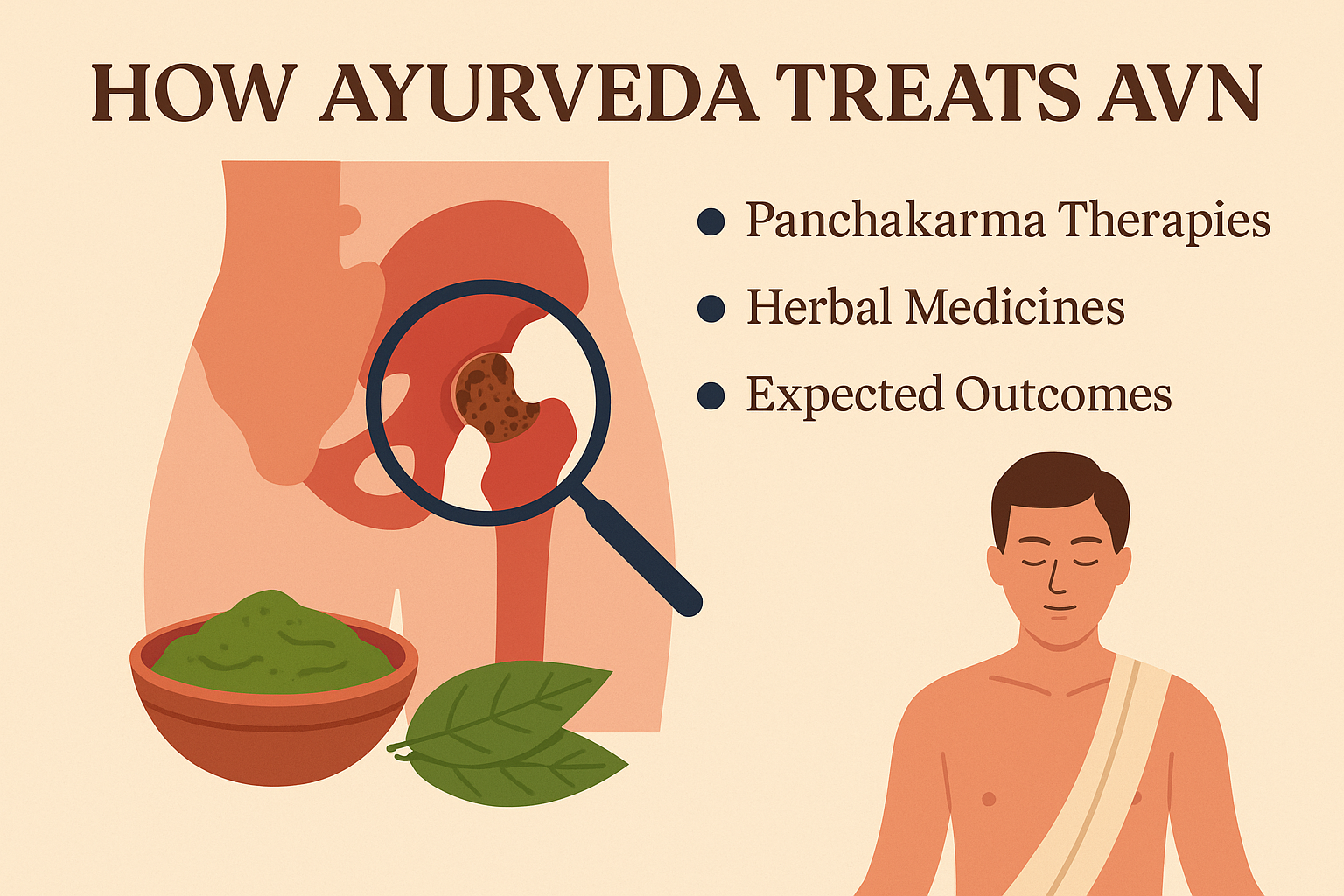
Panchakarma for AVN: Core Therapies
Panchakarma is central to AVN management because it directly addresses Vata imbalance and supports nourishment of deeper tissues. The therapies listed below are commonly used in AVN-focused Ayurvedic centres.
1. Basti (Medicated Enema)
This is the most important treatment for AVN.
Anuvasana Basti (oil-based):
- Nourishes tissues
- Improves lubrication
- Calms aggravated Vata
Niruha Basti (decoction-based):
- Reduces inflammation
- Clears blocked channels
- Improves circulation
A structured course of Basti (8, 14 or 30 days) is often prescribed depending on MRI stage and symptoms.
2. Abhyanga (Medicated Oil Massage)
Therapeutic oil massage helps:
- Improve circulation
- Reduce stiffness
- Nourish tissues
- Prepare the body for deeper Panchakarma
Oils are chosen based on stage, constitution, and pain pattern.
3. Pizhichil (Oil Bath Therapy)
A signature Kerala therapy where warm medicated oil is poured continuously over the body. It helps:
- Reduce inflammation
- Improve perfusion
- Support deep tissue healing
- Ease stiffness
4. Kati Basti / Janu Basti
Warm oil pooling on the hip or knee joint helps:
- Improve lubrication
- Reduce pain
- Strengthen surrounding tissues
5. Lepa (Herbal Paste)
Applied externally to reduce:
- Swelling
- Local inflammation
- Deep-rooted Vata pain
6. Swedana (Herbal Steam)
Used to:
- Reduce stiffness
- Improve mobility
- Enhance circulation
- Support detoxification
Clinical Supervision Matters
For consistent results, AVN treatment is usually carried out in Ayurvedic hospitals that have trained Panchakarma therapists, qualified physicians, and experience managing early to advanced stages of the condition. This single sentence subtly supports your hospital page without keyword stuffing.
Internal Medicines Used in AVN
Ayurvedic hospitals commonly use formulations such as:
- Lakshadi Guggulu
- Ashwagandha and Guduchi preparations
- Gandha Thailam (internal)
- Rasna + Dashamoola combinations
- Punarnava-based medicines
- Medicated ghees
- Classical Rasayana therapies
These help strengthen tissues, reduce inflammation, and nourish bone and marrow.
Expected Outcomes from Ayurvedic Treatment
Stage 1
- Pain reduces significantly
- Mobility improves
- Progression can be halted
- Patients often avoid surgery with lifestyle adherence
Stage 2
- Edema reduces
- Pain and stiffness improve
- Walking tolerance increases
- Progression slows noticeably
Stage 3
- Better gait and mobility
- Reduced inflammatory pain
- Improved daily function
- Surgery can often be delayed
Stage 4
- Pain reduces
- Pain-free mobility improves
- Quality of life becomes manageable
Treatment Duration at Ayurvedic Centres
Best Ayurvedic Hospitals for AVN treatment in India follow below treatment duration for AVN treatment and this is also recommended for better results.
- 14–21 days of intensive Panchakarma
- 30–45 days for deeper-stage AVN
- 3–6 months of medicines after discharge
- Physiotherapy or yoga for mobility strengthening
Patients who follow diet and lifestyle recommendations show the best results.
Who Benefits Most from Ayurvedic Treatment?
Ayurveda is well-suited for:
- Stage 1–3 AVN
- Patients hoping to delay or avoid early surgery
- Those with pain while sitting, walking, or climbing
- Individuals avoiding long-term steroids
- Patients who can commit to 2–4 weeks of therapy
Lifestyle Recommendations for AVN Patients
Ayurvedic doctors usually advise:
- Avoiding long periods of standing or sitting
- Avoiding squatting, running, or high-impact activity
- Eating warm, nourishing foods
- Including medicated ghee (if prescribed)
- Maintaining regular sleep
- Avoiding alcohol and smoking
- Practising gentle stretching or physiotherapy
Lifestyle discipline is essential for results.
Final Thoughts
Ayurveda offers a structured, stage-wise approach to managing AVN by improving circulation, reducing inflammation, calming aggravated Vata, and strengthening bone and joint tissues. For meaningful outcomes, treatment should be done under experienced physicians using authentic Panchakarma, personalised medicines, and supportive physiotherapy. With the right care plan, many patients experience sustained relief and improved quality of life.