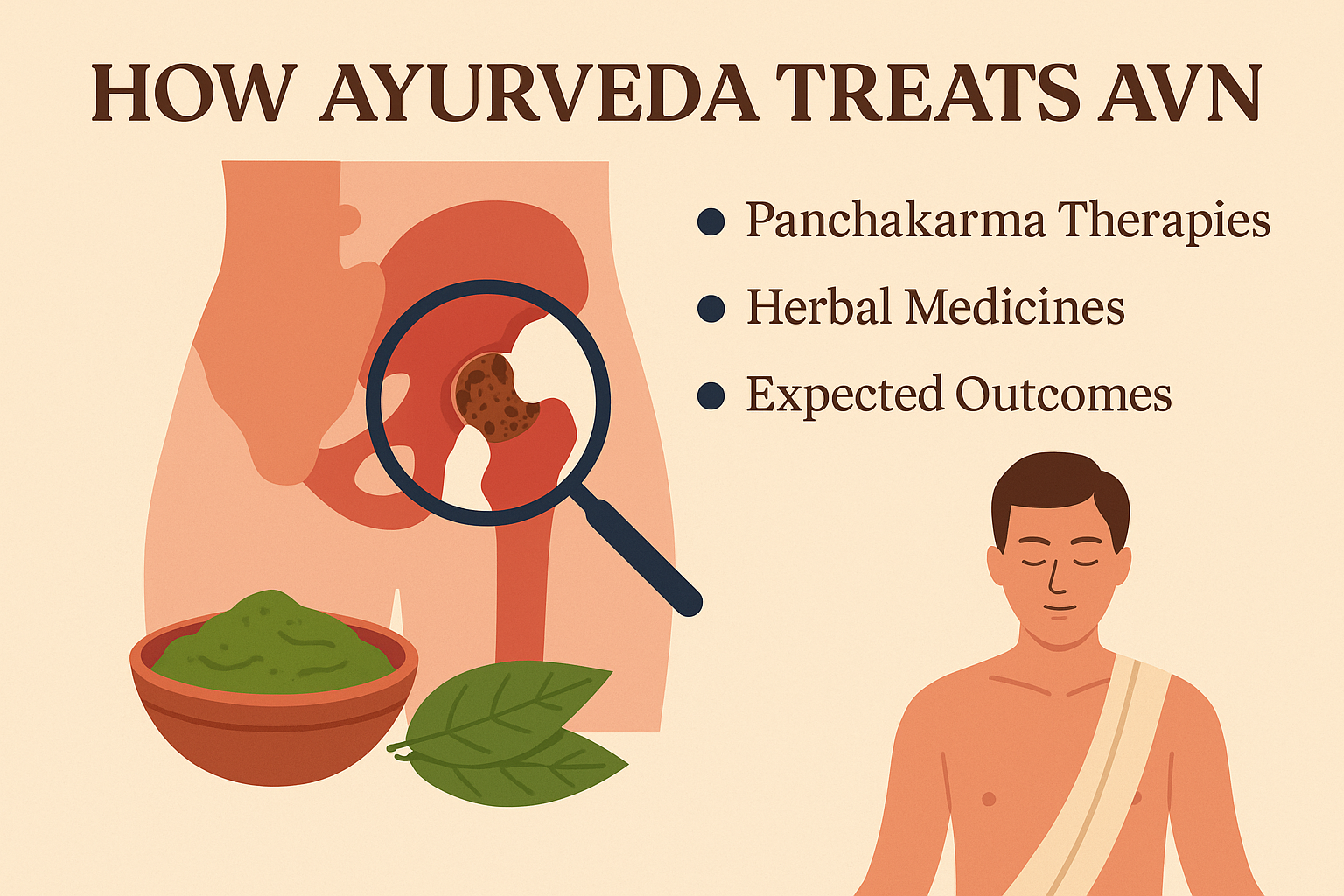
If you’re searching for the best Ayurvedic hospitals for AVN treatment in India, this guide helps you choose safely. It lists hospitals with real clinical experience in AVN, explains the Ayurvedic therapies commonly used (stage-wise), and gives practical advice on reports to carry, realistic treatment timelines, and follow-up care. Use this page to compare hospitals, understand expected outcomes for each stage, and decide where to get treatment based on evidence and clinician expertise.
Quick summary
-
Who this is for: Patients with Stage 1–3 AVN seeking non-surgical Ayurvedic care; selected Stage 4 patients for symptom management.
-
What these hospitals offer: Panchakarma, Basti, Rasayana, physiotherapy/yoga support, and structured follow-up.
-
Minimum recommended stay: 14–30 days (stage dependent).
-
How we selected hospitals: AVN case experience, qualified BAMS/MD doctors, in-house Panchakarma, transparent reviews, AYUSH/NABH or GMP signals.
| Hospital | City | Best for (Stages) | Key Therapies Offered | Minimum Stay |
|---|---|---|---|---|
| Kottakkal Arya Vaidya Sala | Malappuram, Kerala | Stage 1–3 | Panchakarma, Basti, Pizhichil, Lepa, Rasayana | 14–21 days |
| AVP – Arya Vaidya Pharmacy | Coimbatore, TN | Hip & knee AVN (1–3) | Tailored Basti, medicated oils, Rasayana | 14–30 days |
| Vaidyaratnam Oushadhasala | Thrissur, Kerala | Early & mid-stage AVN | Panchakarma, classical protocols | 14–21 days |
| Soukya Holistic Health Centre | Bengaluru | AVN with mobility restrictions | Ayurveda + Naturopathy + Physiotherapy | 14–30 days |
| Punarnava Ayurveda Hospital | Coimbatore, TN | Joint degeneration (stage 1–3) | Basti, Panchakarma, Yoga therapy | 14–30 days |
| Vaidyagrama Healing Village | Coimbatore, TN | Immersive long-term care | Deep therapeutic schedules, Panchakarma | 21–45 days |
| Shivyaya Ayurvedic Hospital | Unnao, UP | Cost-sensitive north India patients | Panchakarma, Basti | 14–21 days |
| SKK Ayurveda | New Delhi | Early-stage, urban patients | Panchakarma, Pinda Sweda, Kayakalpa | 14–21 days |
| BK Arogyam | Varanasi / Mirzapur | AVN with metabolic issues | Rasayana, bone-nourishing formulations | 14–30 days |
| VCC Ayurveda & Medical Research LLP | Delhi (multiple) | Kerala-style therapies without Kerala travel | Kerala-style Panchakarma | 14–30 days |
Why Choose an Ayurvedic Hospital for AVN Treatment
Ayurveda approaches AVN through the deep understanding of dosha imbalance, asthi-dhatu deterioration, srotas (microchannels), and majja dhatu depletion. Treatment is designed to slow progression, reduce pain, and restore function without surgery in early and intermediate stages.
Ayurvedic hospitals are preferred because they offer:
1. Stage-wise treatment based on Ayurvedic principles
Therapies differ in Stage 1, 2, 3 and early 4 AVN. Hospitals with experienced doctors know how to adapt Panchakarma accordingly.
2. Panchakarma treatments that restore perfusion
Specific therapies for AVN include:
- Basti (most important therapy for majja & asthi)
- Abhyanga with medicated oils
- Pizhichil for deep muscle nourishment
- Kati Basti / Janu Basti for joint strengthening
- Lepa for inflammation
- Rasayana therapy for tissue regeneration
3. Ayurvedic formulations that support bone metabolism
Classical medicines often include:
- Guggulu preparations
- Laksha compounds
- Ashwagandha
- Rasna and Dashamoola
- Guduchi
- Medicated ghee
These are adjusted based on the patient’s prakriti and stage.
4. Long-term improvement rather than temporary relief
Ayurveda aims to:
- Improve blood circulation to the femoral head
- Reduce collapse progression
- Improve joint function and mobility
- Reduce pain without long-term dependence on painkillers
- Improve bone strength from within
5. Minimal side-effects and holistic management
Ayurveda focuses on the whole body, digestion, sleep, metabolism, inflammation, and stress, all of which impact AVN progression.
Points to Consider When Selecting an Ayurvedic Hospital for AVN
Choosing the wrong centre can waste precious time and money.
Here is an expert-recommended checklist:
1. Experience With AVN Cases
The hospital must routinely treat:
- Stage 1 and 2
- Stage 3
- Select Stage 4 (with realistic expectations)
Ask:
“How many AVN patients do you handle every month?”
2. Senior Vaidyas Specialised in Bone & Joint Disorders
Doctors should have:
- BAMS
- MD Ayurveda (Kayachikitsa / Panchakarma / Rasayana is ideal)
- Years of exposure to Asthi-Majja disorders
Experience matters more than marketing.
3. In-House Panchakarma Facility
A proper AVN hospital must have:
- Trained therapists
- Clean treatment rooms
- Stage-appropriate therapy guidance
- Daily doctor supervision
4. Physiotherapy or Yoga Therapy Support
Especially for hip AVN, mobility support is essential:
- Strengthening exercises
- Range of motion
- Postural correction
Combined therapy gives better outcomes than Ayurveda alone.
5. Reviews on Google & Other Platforms (Check Carefully)
Very important but use caution:
Be careful if:
- There are many ratings but few written reviews
- All reviews use similar language or expressions
- Reviews appear posted within a short period
- Only 5-star reviews with no balance
Preferred reviews:
- Reviews with detailed descriptions
- Mention of doctors, staff names
- Honest feedback
- Before-after experiences
- Reviews from different months/years
No review platform is 100% reliable, but they give direction.
6. Certifications & Legal Registration
Check for:
- AYUSH department approval
- BAMS/MD qualified doctors
- GMP-certified pharmacy (if they prepare medicines)
- NABH (Best case scenario )
This protects you from unverified practitioners.
7. Realistic Treatment Timeline
AVN cannot be permanently cured in 7–10 days. A good hospital will recommend:
- 14–21 days minimum
- 30 days for deeper treatment
Avoid places that overstate results.
8. Follow-Up Care After Discharge
AVN requires long-term management:
- Medicines
- Diet
- Exercises
- Routine monitoring
Hospitals offering structured follow-ups give better outcomes.
Tests & Reports You Should Carry Before Visiting
Ayurvedic hospitals value modern diagnostics for staging and planning. Carry the following:
MRI Scan (mandatory)
Must be recent (within the last 6 months).
X-Ray of the Affected Joint
AP view, frog view for hip AVN.
Blood Tests
- CBC
- ESR
- CRP
- Vitamin D
- Calcium
- Lipid profile (optional)
– Orthopaedic Notes or Past Prescriptions
– Surgery or Steroid History (if any)
Important for prognosis. Carrying proper reports saves time and ensures correct treatment planning.
Best Ayurvedic Hospitals for AVN Treatment in India
Below is a list curated based on:
- Treatment expertise
- Doctor experience
- Patient outcomes
- Facility quality
- Authenticity
This is NOT a promotional list. Selections are based on Ayurvedic principles, clinical experience, and trust factors.
1. Kottakkal Arya Vaidya Sala – Malappuram, Kerala
Best for: Stage 1–3 AVN, long classical therapy
Why recommended: Century-old classical Kerala protocols, consistent Panchakarma infrastructure, in-house medicines.
Key therapies: Basti (primary), Pizhichil, Abhyanga, Lepa, Rasayana.
Ideal patient profile: Early to mid-stage AVN patients seeking authentic Kerala Ayurveda and longer immersion.
Minimum stay: 14–21 days.
Notes: Strong classical approach and experienced physicians; good for patients willing to commit to longer stays.
2. VP – Arya Vaidya Pharmacy – Coimbatore, Tamil Nadu
Best for: Hip and knee AVN (Stage 1–3)
Why recommended: Classical adherence with a therapeutic environment and trained therapists.
Key therapies: Tailored Basti programs, medicated oil therapies, Rasayana support.
Minimum stay: 14–30 days.
Notes: Strong diagnostic orientation; good balance of tradition and clinical setup.
3. Vaidyaratnam Oushadhasala – Thrissur, Kerala
Best for: Early and mid-stage AVN on a budget
Why recommended: Classical Kerala medicines, experienced vaidyas, cost-effective long-term programs.
Key therapies: Panchakarma, Basti, Lepa.
Minimum stay: 14–21 days.
4. Soukya Holistic Health Centre – Bengaluru
Best for: AVN with mobility restrictions / integrated care seekers
Why recommended: Integrates Ayurveda, naturopathy and physiotherapy for mobility support.
Key therapies: Panchakarma, physiotherapy, diet & lifestyle correction.
Minimum stay: 14–30 days.
5. Punarnava Ayurveda Hospital – Coimbatore, Tamil Nadu
Best for: Structured clinical approach for joint degeneration (Stage 1–3)
Key therapies: Panchakarma, Basti, Yoga therapy.
Minimum stay: 14–30 days
6. Vaidyagrama Healing Village – Coimbatore, Tamil Nadu
Best for: Immersive, distraction-free long-term therapy
Why recommended: Silent healing village model with strict therapeutic routines.
Key therapies: Deep Panchakarma, Rasayana, lifestyle immersion.
Minimum stay: 21–45 days.
7. Shivyaya Ayurvedic Hospital – Unnao, Uttar Pradesh
Best for: North India patients seeking affordable care (Stage 1–3)
Key therapies: Panchakarma, Basti.
Minimum stay: 14–21 days.
8. SKK Ayurveda – New Delhi
Best for: Early-stage AVN, urban patients preferring metro access
Key therapies: Panchakarma, Pinda Sweda, Kayakalpa.
Minimum stay: 14–21 days.
9. BK Arogyam – Varanasi / Mirzapur
Best for: AVN with metabolic co-morbidities; Rasayana focus
Key therapies: Rasayana therapies, bone-nourishing formulations.
Minimum stay: 14–30 days.
10.VCC Ayurveda & Medical Research LLP — Delhi & branches
Best for: Patients who want Kerala-style treatment without traveling to Kerala
Key therapies: Kerala Panchakarma protocols delivered in North India.
Minimum stay: 14–30 days.
Conclusion
Ayurvedic hospitals play a crucial role in managing AVN by focusing on circulation, inflammation reduction, tissue nourishment, and long-term functional recovery.
The hospitals listed here have consistent experience, qualified doctors, authentic Panchakarma facilities, and a structured approach to AVN management.
This list will be updated regularly, ensuring only centres with genuine expertise, good patient feedback, and transparent treatment practices remain included.
Disclaimer
Hospital policies, treatment methods, length of stay, pricing, and phone usage rules may change over time. Please verify all details directly with the hospital before planning your treatment.
-
Can Ayurveda stop the progression of AVN?
In early and middle stages, Ayurveda can slow progression, reduce pain and improve mobility; outcomes vary by stage and adherence. -
Which reports should I carry to the hospital?
Carry a recent MRI (within 6 months), X-rays (AP/frog view for hip), blood tests (CBC, ESR, CRP, Vitamin D) and orthopaedic notes. -
How long is the recommended in-hospital stay?
Minimum 14–21 days for initial Panchakarma; many patients benefit from 30 days or more depending on stage. -
Is Basti safe for AVN?
When performed under experienced doctors and trained therapists, Basti is generally safe and is a primary therapy for asthi/majja issues. -
Can Ayurveda reverse late-stage AVN (collapsed femoral head)?
Advanced collapse cannot be reliably reversed; Ayurveda helps with pain control and mobility but combined orthopaedic advice is recommended. -
Will I need physiotherapy along with Ayurveda?
Yes. Physiotherapy or supervised yoga helps regain strength, range of motion, and functional mobility.