
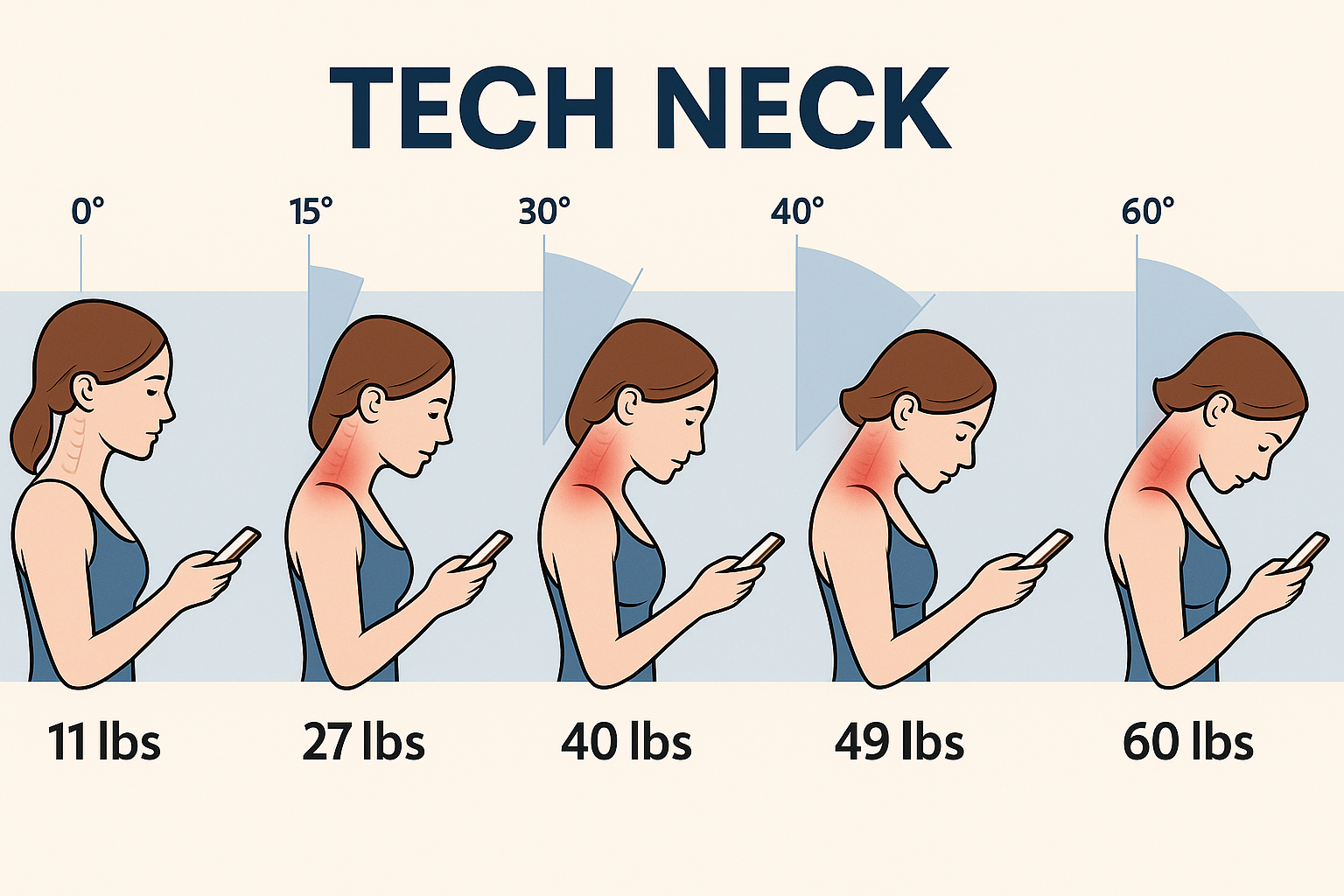
Introduction: The Rise of “Tech Neck” in the Modern Workplace
In today’s digital-first world, working professionals spend an average of 8–10 hours every day on laptops, mobile phones, and digital screens. While this hyper-connected lifestyle has made work easier, it has quietly brought in a new health epidemic: Tech Neck.
Tech Neck refers to the chronic stress and strain on the cervical spine caused by bending your head forward for long periods while using screens. Whether you’re replying to emails on your phone, attending back-to-back online meetings, or coding for hours, the repeated forward head posture slowly damages the delicate tissues of the neck, shoulders, and upper back.
Over time, this leads to:
-
cervical pain
-
muscle tightness
-
nerve compression
-
fatigue
-
headaches
-
and sometimes even tingling sensations in the arms
Ayurveda offers a holistic, natural, and highly effective approach to healing Tech Neck—by treating not just the symptoms, but the root cause of the imbalance.
In this detailed guide, we’ll explore its causes, symptoms, Ayurvedic understanding, and clinically proven treatments for long-term relief.
What Is Tech Neck? (Understanding the Digital Spine Disorder)
Tech Neck—sometimes referred to as “Text Neck”—is a repetitive stress injury caused by prolonged forward bending of the head while using laptops, phones, tablets, or gaming devices.
Normally, your head weighs around 4–5 kilograms. But when you tilt your head:
-
15° forward → pressure becomes 12 kg
-
30° forward → pressure becomes 18 kg
-
45° forward → pressure becomes 22 kg
-
60° forward → pressure becomes nearly 27 kg
This means your neck muscles, ligaments, and cervical discs are carrying 5x more weight simply because of posture.
For working professionals, this pressure continues for hours, leading to chronic inflammation, stiffness, and structural imbalance.
Causes of Tech Neck in Working Professionals
Tech Neck develops gradually, often without noticeable pain in the beginning. Here are the major contributors:
1. Forward Head Posture While Using Screens
The most common cause is bending your head down to look at:
-
laptop screens placed too low
-
mobile phones held near the lap
-
tablets used without stands
This misalignment increases cervical spine stress and weakens neck support muscles.
2. Poor Desk Ergonomics
Many professionals work in setups that are not spine-friendly:
-
screen below eye level
-
chair without lumbar support
-
keyboard placed too high or too low
-
working from bed or sofa
-
long hours without standing or stretching
These habits accelerate muscle fatigue and joint strain.
3. Excessive Mobile Phone Usage
Scrolling social media, texting, or responding to emails on your phone forces the neck into a sustained forward-flexed position, causing muscular imbalance.
4. Weak Neck & Upper Back Muscles
Most corporate workers sit all day without engaging their core or upper body. This leads to:
-
weak trapezius
-
tight levator scapulae
-
reduced cervical stability
Weak muscles cannot hold your head upright for long, causing quicker fatigue and pain.
5. Mental Stress & Muscle Tension
Stress leads to:
-
stiff shoulders
-
tight upper back
-
shallow breathing
-
heightened pain sensitivity
This creates a cycle where physical strain increases mental stress and vice versa.
6. Reduced Physical Activity
Lack of daily movement disrupts the balance of the spine, contributing to postural deformities like:
-
slouched shoulders
-
rounded upper back
-
developing a stubborn “neck hump”
Symptoms of Tech Neck
Tech Neck symptoms can range from mild discomfort to chronic pain affecting productivity and quality of life.
The most common symptoms include:
1. Neck Pain & Stiffness
Difficulty turning your head or pain after long work sessions.
2. Shoulder & Upper Back Pain
Developing knots, tightness, or burning sensations around shoulder blades.
3. Headache or Head Heaviness
Tension headaches originating from neck strain.
4. Tingling or Numbness in Arms
Nerve compression in the cervical spine leading to radiating sensations.
5. Reduced Mobility of the Neck
Difficulty looking up, down, or sideways without discomfort.
6. Poor Posture & Visible Neck Hump
Chronic rounding of shoulders and forward head posture.
7. Eye Strain & Fatigue
Because neck and eye muscles often strain together during screen use.
8. Dizziness or Imbalance (in severe cases)
Due to cervical nerve involvement.
If these symptoms are ignored, Tech Neck may gradually lead to:
-
cervical spondylosis
-
degeneration of cervical discs
-
chronic nerve irritation
-
postural deformities
Ayurvedic Understanding of Tech Neck
In Ayurveda, Tech Neck is understood as a combination of:
1. Vata Dosha Imbalance
Vata governs all movement, including:
-
nerve impulses
-
muscle contraction
-
joint lubrication
Excess screen time, long sitting hours, irregular routines, and stress aggravate Vata, leading to:
-
pain
-
stiffness
-
dryness
-
cracking sensations
2. Depletion of Shleshaka Kapha Around Cervical Joints
Due to strain and poor posture, the natural cushioning around the neck joints reduces, causing friction and cracking.
3. Aggravation of Prana Vata (in the head and neck region)
This results in:
-
headaches
-
anxiety
-
mental fatigue
-
dizziness
-
sleep disturbances
Ayurvedic treatment focuses on restoring balance through external therapies, herbal medications, and lifestyle modifications.
Ayurvedic Treatment for Tech Neck
Ayurveda provides a multi-layered approach that includes:
-
pain management
-
reducing inflammation
-
strengthening muscles
-
correcting posture
-
calming the nervous system
Here are the most effective Ayurvedic treatments used in clinics and wellness centers:
1. Abhyanga (Warm Oil Massage)
Warm oil massage helps:
-
relax tense muscles
-
reduce inflammation
-
nourish cervical joints
-
improve blood circulation
Recommended oils:
-
Mahanarayan oil
-
Ksheerabala oil
-
Bala-Ashwagandha oil
Daily 10–15 minute massage on neck and shoulders is highly beneficial.
2. Greeva Basti (Cervical Oil Pool Therapy)
This is one of the most effective treatments for Tech Neck.
A dough ring is placed on the neck and filled with warm medicated oil. The warmth penetrates deep into the tissues to:
-
reduce pain
-
relax stiff muscles
-
lubricate joints
-
improve mobility
A 7–14 day course gives long-lasting relief.
3. Nasya Therapy (Nasal Oil Administration)
Nasya clears the channels in the head and neck, relieving:
-
headaches
-
stiffness
-
nerve irritation
-
stress
Oils used:
-
Anu Tailam
-
Shadbindu Tailam
A 7-day treatment is commonly recommended.
4. Potli Massage (Navarakizhi / Herbal Pouch Massage)
Heated herbal pouches stimulate:
-
deeper tissues
-
muscle knots
-
lymphatic drainage
-
overall relaxation
Ideal for severe stiffness and upper back pain.
5. Ayurvedic Herbal Medicines
Ashwagandha
Reduces stress, relaxes muscles, improves nerve strength.
Guggulu Formulations (Simhanad Guggulu / Yogaraj Guggulu)
Excellent for pain, inflammation, and stiffness.
Shallaki & Rasna
Natural anti-inflammatory herbs that support joint health.
Dhanwantharam Thailam / Sahacharadi Thailam
Used for external application and massaging weakened cervical areas.
Note: Always take internal herbs under guidance of an Ayurvedic physician.
6. Panchakarma for Chronic Tech Neck
If pain is severe or radiating to arms, Panchakarma detox therapies like:
-
Virechana (detox through herbs)
-
Basti (medicated enema for Vata balancing)
are highly effective for long-term solutions.
Daily Habits & Home Remedies to Prevent Tech Neck
Ayurveda strongly emphasizes prevention, especially for lifestyle disorders.
These simple changes can drastically reduce neck pain:
1. Correct Your Desk Setup (Ayurvedic Ergonomics)
-
Keep screen at eye level
-
Use a laptop stand
-
Place keyboard at a neutral height
-
Ensure chair provides lumbar support
-
Keep feet flat on the floor
A proper setup reduces 70% of cervical strain.
2. Follow the 20-20-20 Rule
Every 20 minutes:
-
look 20 feet away
-
for at least 20 seconds
This relaxes both neck and eye muscles.
3. Do These 5-Minute Office Yoga Stretches
(Perform every 2 hours)
-
Neck rotations
-
Shoulder rolls
-
Upper trapezius stretch
-
Chin tucks
-
Thoracic extension stretch
Chin tucks are the most powerful exercise to reverse Tech Neck.
4. Use Warm Compress at End of Day
A warm towel or heating pad:
-
improves flexibility
-
reduces pain
-
relaxes fatigued muscles
5. Eat Warm, Nourishing Foods
To balance Vata:
-
ghee
-
warm soups
-
turmeric milk
-
ginger tea
-
cooked vegetables
-
almonds & dates
Avoid cold foods, raw salads at night, and aerated drinks.
When Should You See a Doctor?
Seek professional help if:
-
pain persists for more than 2–3 weeks
-
numbness or tingling spreads to arms
-
severe headaches become regular
-
stiffness restricts mobility
-
pain disrupts sleep
These may indicate deeper cervical issues.
Final Word
Tech Neck is more than just a temporary discomfort—it’s a growing lifestyle disorder among working professionals. With increasing screen time and reduced physical activity, cervical pain has become a major cause of reduced productivity, stress, and long-term health issues.
Ayurveda offers a balanced, powerful, and holistic approach to treating Tech Neck by:
-
relieving pain
-
strengthening the neck
-
correcting posture
-
calming the mind
-
preventing recurrence
Whether you’re a corporate employee, student, or entrepreneur, adopting Ayurvedic practices can help you stay pain-free, productive, and energetic in your daily life.
What is Tech Neck?
Tech Neck is a posture-related condition caused by bending the head forward while using screens for long hours. This increases pressure on the cervical spine and leads to pain, stiffness, and reduced mobility.
Can Ayurveda cure Tech Neck permanently?
Yes. Ayurveda treats Tech Neck by reducing inflammation, balancing Vata dosha, improving joint lubrication, and strengthening neck muscles through therapies like Abhyanga, Greeva Basti, Nasya, herbs, and corrective lifestyle routines.
How long does it take to recover from Tech Neck?
Mild cases improve in 7–14 days with correct posture and home remedies. Chronic cases may take 3–6 weeks with guided Ayurvedic therapies and physiotherapy support.
Is Tech Neck same as Cervical Spondylosis?
No, but untreated Tech Neck can lead to early cervical degeneration, nerve compression, and spondylosis over time. Early treatment prevents long-term damage.
What is the best exercise for Tech Neck?
Chin Tucks are the most effective. They help realign the spine, strengthen deep neck flexors, reverse forward head posture, and relieve tension instantly.
Can Tech Neck cause headaches?
Absolutely. Tension in the neck muscles can trigger cervicogenic headaches, migraine-like pain, and pressure around the forehead and eyes.
Which Ayurvedic oil is best for daily neck massage?
Mahanarayan Oil, Bala-Ashwagandha Oil, and Ksheerabala Oil are excellent for reducing stiffness, improving flexibility, and calming Vata.