When you hear “Avascular Necrosis” (AVN) for the first time, it can sound terrifying. Doctors often describe it as “bone death.” And in most cases, the next line you hear is — “You’ll eventually need surgery.”
But what if that’s not the only path? What if your body had the ability to repair itself naturally, if given the right care, nourishment, and balance?
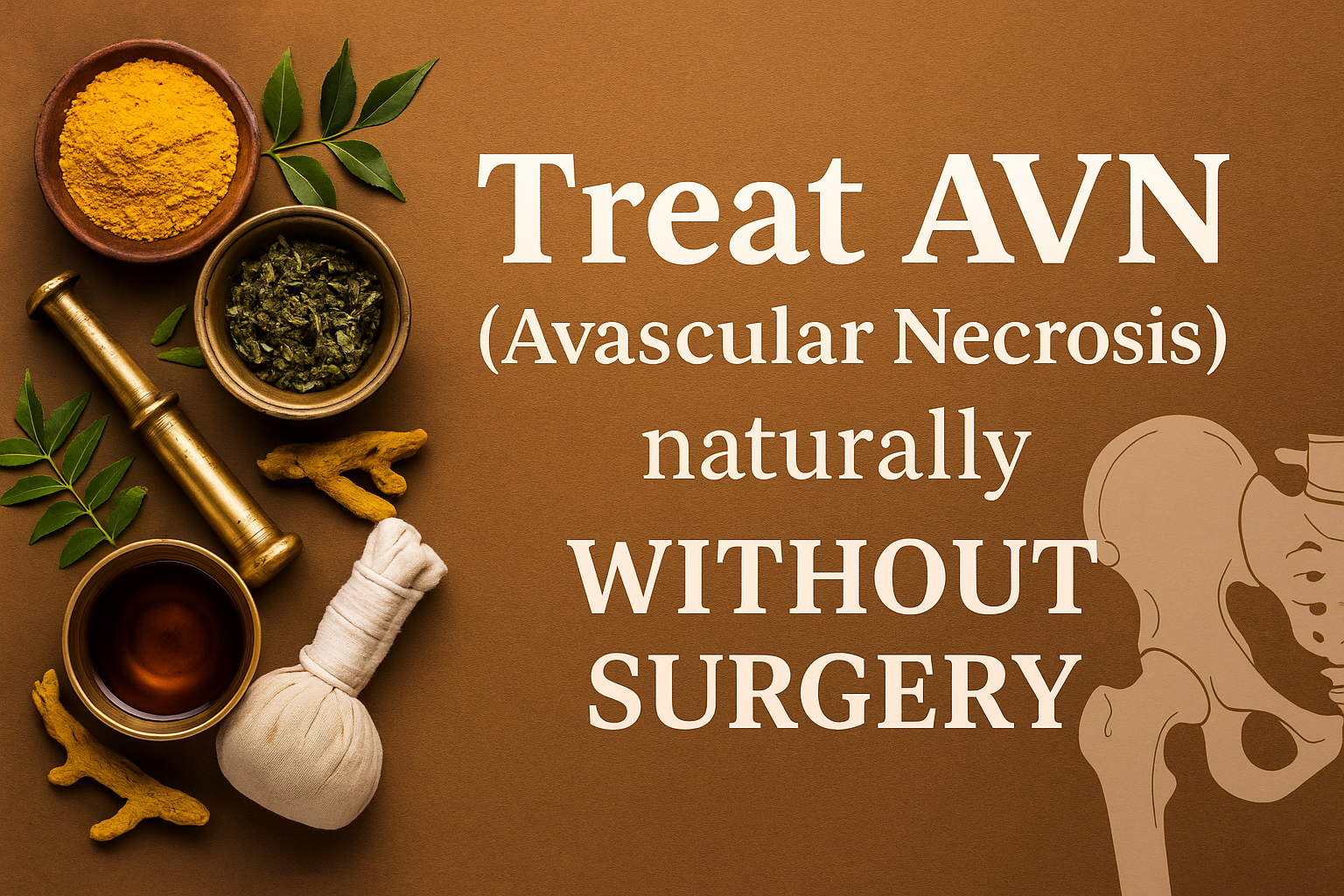
That’s exactly what Ayurveda believes and thousands of patients are now exploring this ancient, non-surgical approach to healing AVN naturally.
🦴 What Exactly Is Avascular Necrosis?
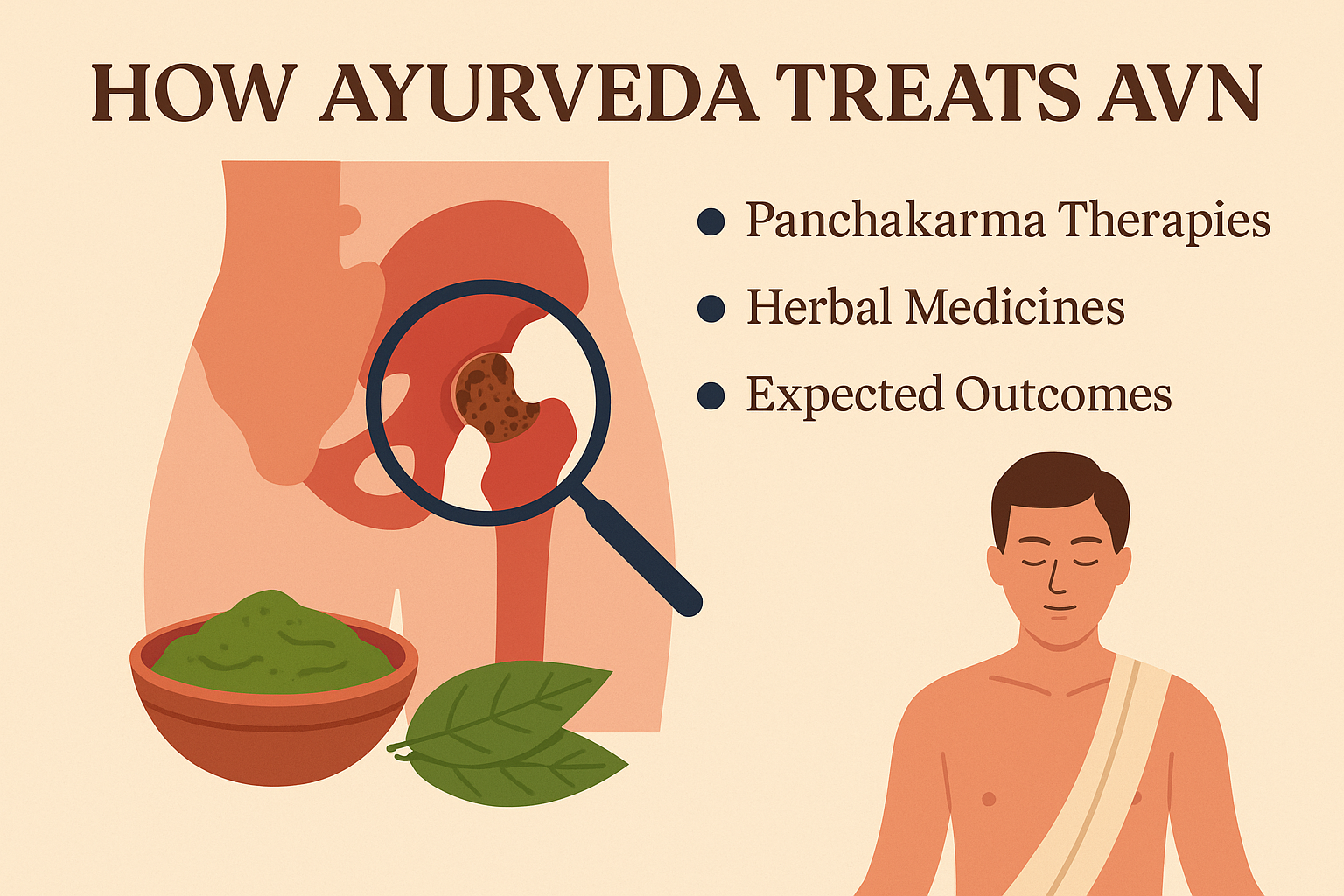
Avascular Necrosis (AVN), also called Osteonecrosis, happens when a bone usually in the hip loses its blood supply.
Without enough oxygen and nutrients, the bone cells begin to die, leading to pain, stiffness, and in later stages, joint collapse.
It most often affects the hip joint, but can also occur in the shoulder, knee, or ankle.
Common causes include:
-
- Long-term use of steroids
-
- Alcohol consumption
-
- Injury or fracture near the joint
-
- Autoimmune conditions or blood disorders
In the early stage, AVN often hides behind mild groin or thigh pain. Over time, movement becomes difficult, and doctors recommend hip replacement surgery to relieve pain and restore function.
⚕️ The Allopathic (Modern Medical) Route
Modern medicine manages AVN based on how far the condition has progressed:
| Stage | Allopathic Treatment |
|---|---|
| Stage I–II | Painkillers, physiotherapy, restricted activity, sometimes core decompression surgery |
| Stage III–IV | Bone grafting, stem cell therapy, or total hip replacement (THR) |
Surgery can bring quick relief, but it’s not a cure it replaces the damaged bone, not repairs it.
Limitations of Surgery:
-
- Hip implants wear out after 10–15 years
-
- May require revision surgery later
-
- Limited flexibility and mobility
-
- Expensive and needs long recovery
So while surgery can reduce pain, it doesn’t address why the bone started dying in the first place.
🌿 The Ayurvedic Perspective: Healing From the Roo
Ayurveda looks at Avascular Necrosis very differently.
It doesn’t view the bone as “dead”, it sees it as a living tissue that has lost nourishment due to an imbalance in the body.
According to Ayurveda, AVN occurs due to an aggravated Vata Dosha, which controls circulation and bone health.
When Vata is disturbed, it “dries out” the bone tissue (Asthi Dhatu), leading to weakness and degeneration.
Ayurvedic treatment focuses on three key goals:
-
- Restore blood flow and oxygen to the bone
-
- Rejuvenate and rebuild bone tissue
-
- Balance the doshas and strengthen the whole body
💧 Step-by-Step: How Ayurveda Treats AVN Naturally
1. Detoxification (Panchakarma)
Ayurvedic therapy often starts with Panchakarma, a cleansing process that removes deep-seated toxins and improves circulation.
Key therapies include:
-
- Abhyanga (Oil Massage): Warm herbal oils nourish joints and improve blood flow
-
- Swedana (Steam Therapy): Reduces stiffness and inflammation
-
- Basti (Medicated Enema): Deeply nourishes bones and balances Vata
This prepares the body for the next phase — regeneration.
2. Bone Regeneration (Rasayana Therapy)
After detox, Ayurvedic doctors prescribe Rasayana medicines — rejuvenating herbal formulations that rebuild bone tissue.
Commonly used herbs:
-
- Laksha Guggulu – enhances bone formation
-
- Ashwagandha – strengthens bones and reduces stress
-
- Shilajit – improves calcium absorption
-
- Bala & Dashmool – relieve inflammation and pain
These medicines are chosen based on your body type (Prakriti) and stage of AVN.
3. Diet & Lifestyle
Diet plays a huge role in recovery. Ayurveda recommends foods that are warm, unctuous, and nourishing.
✅ Recommended: Ghee, milk, sesame seeds, dates, figs, turmeric
❌ Avoid: Alcohol, smoking, dry/spicy foods, excessive fasting
Gentle Yoga postures (like Setu Bandhasana and Supta Baddha Konasana) improve circulation, while Pranayama enhances oxygen supply to the tissues.
✨ What Patients Report After Ayurvedic Treatment
Many AVN patients who opted for Ayurvedic care — especially in early or mid stages — report:
-
- Pain reduction within 3–4 weeks
-
- Better joint flexibility and sleep
-
- Improved walking and sitting comfort
-
- MRI reports showing reduced lesion size after 3–6 months
While results vary from person to person, Ayurvedic treatment has helped many avoid surgery altogether, especially when started early.
💰 Cost Comparison: Ayurveda vs Surgery
| Treatment Type | Duration | Approx. Cost (India) |
|---|---|---|
| Hip Replacement Surgery | 1–2 weeks + rehab | ₹2–5 lakhs ($2,400 – $6,000) |
| Ayurvedic Treatment (Non-surgical) | 6–12 weeks | ₹50,000 – ₹1.5 lakh ($600 – $1,800) |
Besides being more affordable, Ayurvedic therapy comes without the fear of implants, complications, or repeat surgeries.
🌍 Why Global Patients Choose Ayurveda for AVN
People from the US, Europe, and the Middle East are increasingly choosing India for Ayurvedic AVN care because it offers:
-
- A natural alternative to surgery
-
- Personalized treatments based on body type
-
- Holistic healing — physical and emotional
-
- Lower costs and better recovery experience
Many wellness centers now provide integrated programs combining Ayurveda, physiotherapy, and diet — showing measurable improvements in MRI scans.
🪷 Final Thoughts
Avascular Necrosis doesn’t have to mean the end of mobility or the beginning of lifelong surgery plans.
While modern medicine replaces what’s lost, Ayurveda revives what’s alive.
If you’re diagnosed with AVN, consider exploring Ayurvedic care early — when the chances of bone regeneration are highest.
Sometimes, the most powerful medicine is not what replaces the body, but what helps it remember how to heal itself.